
About the builder
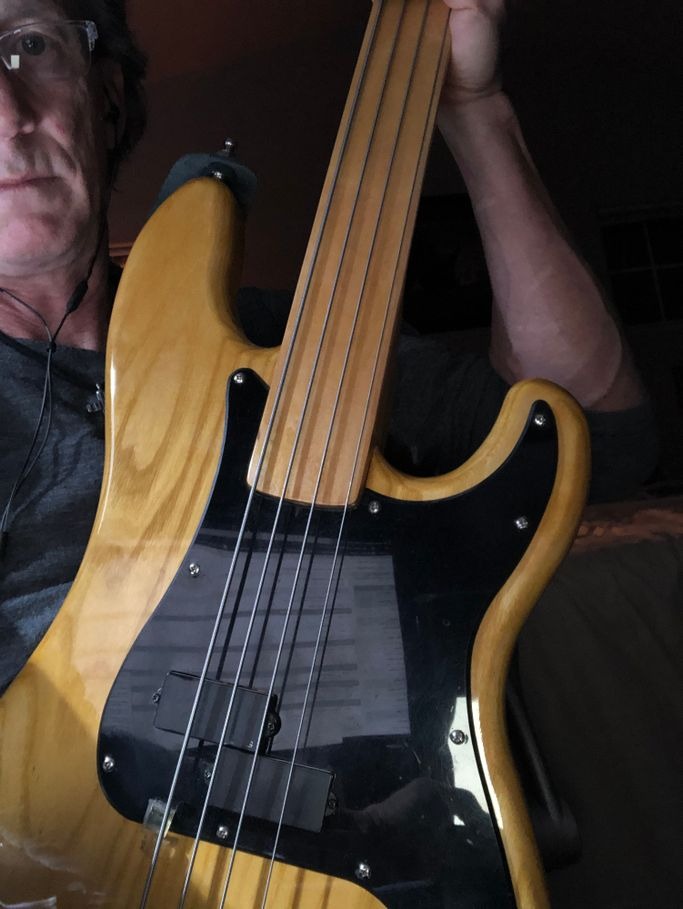
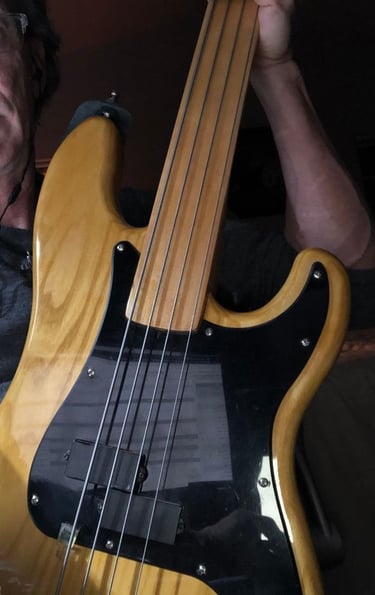
I find the creative process to be a conversation. Great conversation requires the ability to both express yourself as much as listen. To ask, prod, and listen with the ears of a child. As a musician, composer, performer, those parameters are obvious. As a builder, I now find myself listening to a different audience. That audience can be the client, the wood, or an ethereal concept searching for earthly form. I find each and every one of those conversations intoxicating. I built my first Bass somewhere in the mid 80’s, mostly because I couldn’t find what I wanted. I built it from a fretless maple P-bass neck I found hiding in the back corner of a music shop. I think it cost all of 55 dollars. Truth be told, I had no idea how to do it. Yet to this day that instrument remains one of my top two “go-to” axes. Later, as a working musician I continued to experiment with builds, but playing and day jobs took precedent. I built out of necessity, either because I couldn’t find what I wanted, or couldn’t afford it. Now that my priorities have shifted I’m finally having those long overdue conversations with wood, metal, wires, and yes, clients. Now, I build for the sheer joy of it Michael
At Phoenix Basscraft, every instrument is a personal creation, built with care and designed to feel like your favorite jeans—comfortable, reliable, and truly yours.
Craftsmanship
Phoenix Basscraft is committed to quality and customer service, with focus on craftsmanship and detail using the best materials available. This is not a static state, but rather a constant evolution. And therein lies the beauty. Instruments are individually made and can be customized to your specifications. Each one is hand crafted by me, a long time bassist. I understand what a bassists wants and needs in an instrument. An instrument that is as beautiful to look at as it is to hear, and play. Something that feels like your favorite jeans fresh out of the dryer. An instrument that simply can't be ignored. Please refer to my reviews section for feedback and references. I proudly feature Nordstrand pickups and preamps in most stock builds.
Standard Features & Specs
Design
5 string, 35" scale
24 frets
17.5mm string spacing @ bridge
12" radius
Proportional spacing at the nut
Neck thru design
Zero fret design
Ball end frets
Stainless steel or bell bronze frets
Hipshot hardware
Nordstrand p'ups
Nordstrand 2b preamp
Dunlop flush mount strap locks
Threaded inserts for all fasteners
neck dim nut: 43mm width x 20mm deep
Neck dim heel: 73mm width x 23mm deep
Deep cut pocket @ heel
Military grade silver rf cloth shielding
Under 9 lbs, usually 7-8
Strap, strap locks, hardshell case included
Slimline Neck
The shape of the neck has taken years of refinement to achieve what I am very excited about! It originated from a 60's P profile, thinned slightly and strategically, then modified to a C-D. It feels slick, fast, organic, and stable (even as a one piece). Always hand shaped and finished with a specialized CA glue finish process that is thin, durable, and feels like nitro. Truss rods are custom built by Mike Gutsch. They'll outlast the wood. They have a custom thread pitch for smooth, fine adjustments (but not so fine that it becomes tedious). Anti vibration tubing to keep turning smooth and will never rattle. The T-rod ends distribute the load horizontally in the neck, providing additional structural integrity, especially in thin necks.
Body
The Rise body shape is also a culmination of trial and refinement beginning with a specialized neck pocket/lower cut arrangement. The pocket shape allows allows effortless, comfortable access to all strings @ 24th. You may not need all 24 but hey, why have 'em if you can't use 'em? The control area stepdown serves form as well as function. The controll placement is ergonomically arranged to match natural arm movement. The usual cutaways for belly and arm are there too.
A word about Frets...
I use Sintoms stainless or bell bronze fret wire, slightly slimmer than medium jumbo. There's a lot of controversy to be found on the topic of zero frets. When in doubt, I refer to science. https://www.premierguitar.com/string-nut-or-zero-fret.The main purpose of this is uniformity of tone. An open note sounds more like a fretted note. If you're still in doubt, ask Brian May of Queen. His Little Red Special survived 40 years, and multiple refrettings before his zero fret finally tapped out. And no one can argue that guitar didn't get played...a lot. I take particular pride in frets, and fret ends. Once a "challenge accepted", it has grown to become become a "thing" for me. I approach this aspect with the revere of crafting fine jewelry. The best fret ends are the ones you don't know are there. Fret slots are cut to the arc of the board, not flat. Will the guy/gal in the 32'nd row, stage left, think "That solo would have been perfect, if only the fret slots had been radius cut"?....Nope. In truth, the player never will either. This simply speaks to the pursuit of excellence, love of the craft and the drive for perfection. Just like how we play.
Details matter...
Electronics
wiring:
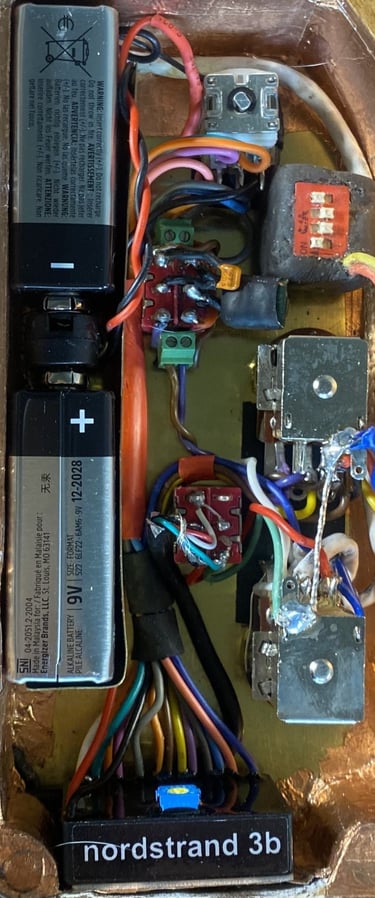
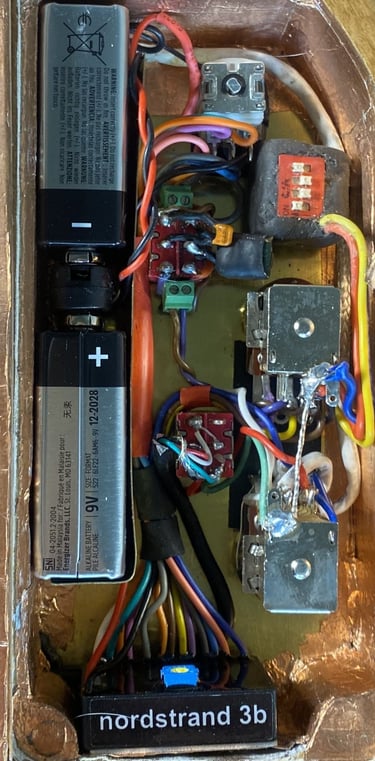
Most wiring is solid core silver. Stranded silver is used for movable components like battery connectors and tone modules. All have high temp, cut resistant PVC coating for durability and added stiffness to resist breakdown of the wire over time and use.
shielding:
All wires, cavities, windings, and p'up covers are redundantly shielded and properly grounded whenever possible to maximally resist RF interference. Military grade RF shielding cloth is used, the same as used in highly sensitive computer environments. I have found this particularly helpful with passive configurations.
Passive tone modules:
There are currently two passive tone modules available. Of course, each instrument sounds great as is. But, for those who like to tweak, or simply like to explore, I provide these options. The mid-enhancement module is a selection of capacitors and micro switches inside the control cavity, and is user adjustable. The module consists of five capacitors. Any combination can yield seven ranges for light treble cut, and two standard ranges (.033 and .047pf). In a passive treble cut circuit, with resistance near 0 (tone knob < 2) the resonant peak frequency of the p'up shifts down into the midrange. While technically not a boost, your ear hears it as such. Each of the seven ranges will flavor that mid enhancement differently, and is tunable to the user's preference. With more resistance (ie, tone knob > 2) it behaves as a very light treble cut. Great for preserving the natural tone of the instrument while only cutting the harsher highs of undesirable freeloading electrons, or fresh strings. The mid cut module is an effective, old-skool device. I've modified it to provide different tonal capacities that are user adjustable. As a side note, mild distortion can sometimes be achieved as well with higher output p'ups as the knob nears 0. All instruments are delivered set to what I feel is most usable. But then, it's your baby, your gig. Make your tone known!
Preamps: Nordstrand Pre's can be configured to work in place of, or in tandem with passive controls. They're my 1st choice. Incredibly transparent, hugely adjustable. 3 band EQ comes with a 5 way selector with preset mid range boost/cut frequencies @ 200, 350, 600, 800, and 1khz.
Control configurations: While the builds are standardized, nearly any control configuration can be arranged. It just depends on what works for you. Noble pots are used mostly, with some custom built by me to accommodate the odd set of proclivities. While magnets are slick, control cavities are sealed with screws. This prolongs the life of the pots by keeping the environment as debris free as possible. The adjustments to the PBC tone modules tend to be a "set & forget" arrangement. so frequent access is typically not an issue.
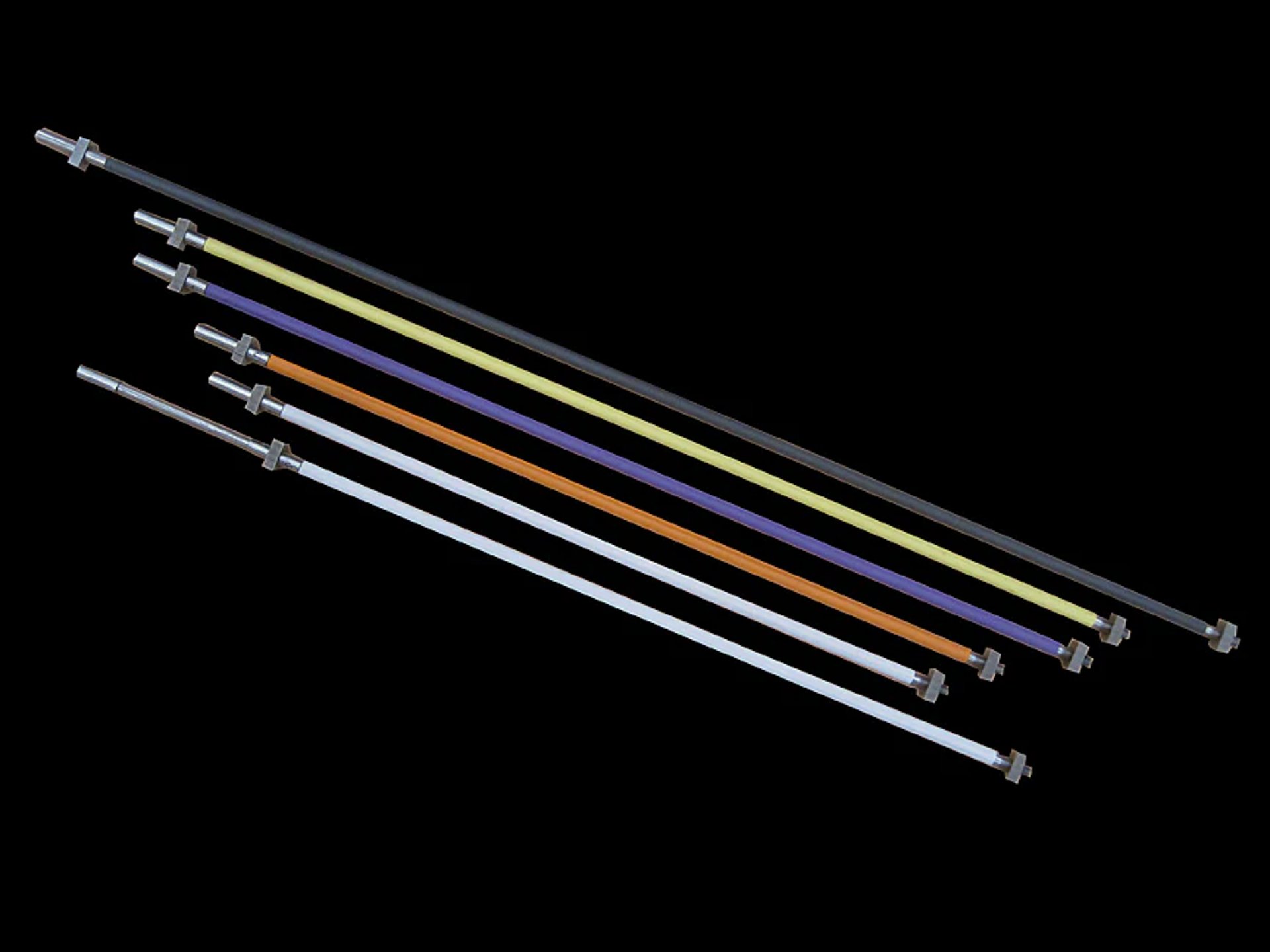
More details that matter...
Truss Rods
Designed and manufactured in Healdsberg, CA by Mike Gutsch. These Flexstrong trussrods are custom ordered to exact specifications for Phoenix Basscraft. They feature:
All stainless steel construction
Simple dual action design that allows for smooth, fine adjustment (but not so fine as to risk bottoming out the threads, or being overly tedious to adjust)
Anti-vibration tubing to ensure against the rod binding up in the channel or "wolf tones" from minute rattling at certain frequencies
"T-rod" end blocks for large footprints, pressure distribution and to facilitate thin neck shapes
induction brazed for superior strength, reliability and durability
These rods cost a little more. OK, more than a little. But well worth the investment.